A Cross-Cultural Approach to the Aesthetics of Existence
a six-session seminar
With Camilo Rios & Carlos A. Segovia
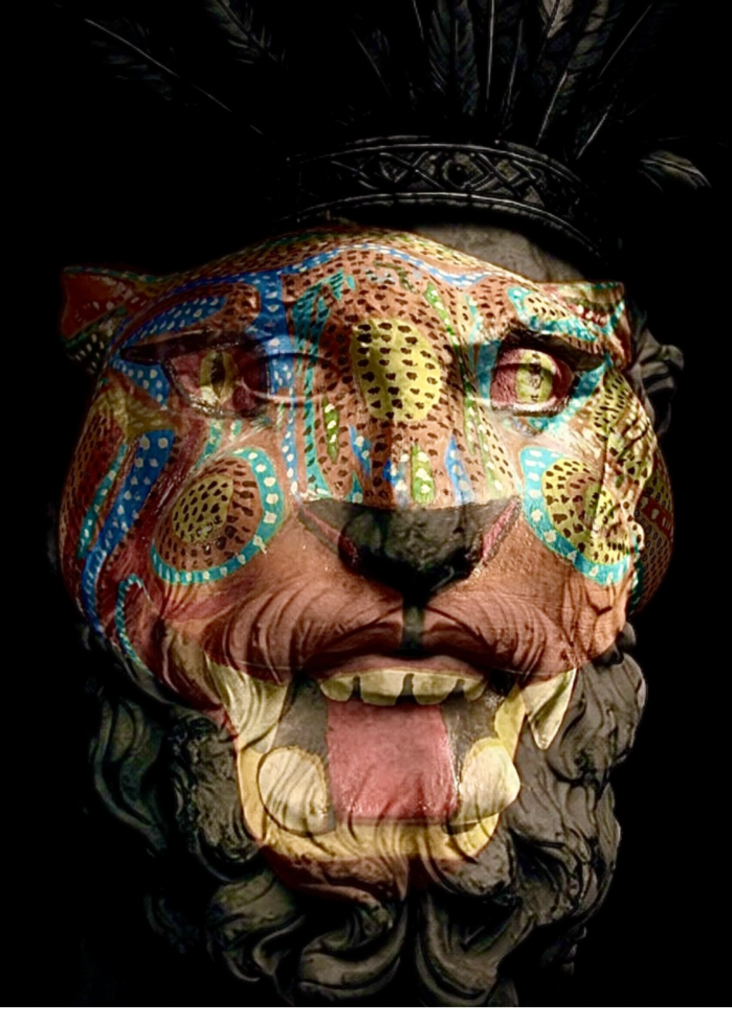
“… to substitute a history of systems of morality, which would be made from prohibitions, for a history of ethical problematizations made from practices of the self.” – Michel Foucault
“We are all cannibals.” – Claude Lévi-Strauss
* May 16, 23, 30 + June 6, 13, 20, 2026
* 10:00–12:00 Eastern US Time Zone • 16:00–18:00 Central European Time. (See TimeZone Converter for your location.)
* A Zoom link will be provided on registrationThree options (registration at bottom of this page.):
* Three payment options:
(i) $120 for non-members (become a member).
(ii) $90 for members.
(iii) Solidarity. We are happy to make our offerings available at reduced or no-cost if you can not otherwise join. If you would like to request this option, please email us at inciteseminarsphila@gmail.com with the following information: (1) your current country of residence; (2) reason for requesting this option; (3) amount you can pay: $30, $40, $50 or more (we will send you the payment link); (4) if you are requesting no-cost, are you reasonably certain that you will attend the entire session(s)?
SEMINAR DESCRIPTION
Following his more institutional analyses of power networks, developed primarily during the second half of the 1970s, it is possible to identify what appears to be a break—or at least a watershed—in Michel Foucault’s research trajectory. Up to that point, Discipline and Punish (1975) and The Will to Knowledge (1976) continued to orient genealogical investigations into the more or less contemporary configuration of modern societies. To this body of work must be added the Collège-de-France lectures that Foucault himself chose to publish under the title History of Governmentality (Society Must Be Defended, 1976; Security,Territory, Population, 1977; and The Birth of Biopolitics, 1978). Coincidentally—or perhaps not—1979 marked a pause, an inflection point. The last five Collège-de-France courses (On the Government of the Living, 1980; Subjectivity and Truth, 1981; The Hermeneutics of the Subject, 1982; The Government of Self and Others, 1983; and The Courage of Truth, 1984), together with the profound reconfiguration of the History of Sexuality project—from six planned volumes to four—bear witness to this shift.
However, where many have seen discontinuity, rupture, or a clean break, we cannot help but see passage, threshold. If the task of critique is, according to Foucault, to account for what we are and for what has led us to become so, then this task is not complete except insofar as it constitutes an ontology of the present capable of enabling us, in turn, to cease being what we are —and become otherwise. In short, Foucault’s 1979 shift can be described as a transition from the critical inquiry into “the government of others,” to the critical inquiry into “the government of the self.” Within this framework, Foucault comes to see it as necessary to trace the history of the forms of “the government of the self”—a history of silencing, retreat, and strategic distortion effected by “the government of others” upon many forms of self-government—beginning in the period comprised between the fifth century BCE and the fifth century CE, where he identifies, within Greek culture, the emergence of a set of practices centered on the production of one’s own life as a work of art.
It is in the aforementioned final five Collège-de-France courses, in volumes two and three of the History of Sexuality, in several other lectures—delivered mostly in the United States—and in a series of likewise late interviews, that we find the textual corpus of Foucault’s agenda on the “Aesthetics of Existence” expanded in different ways and at different tempos. This agenda traverses a series of Hellenic philosophical schools such as the Epicurean, the Stoic, the Cynic, the Pythagorean, and the Platonist, and investigates the concrete practices “that permit individuals to effect, by their own means or with the help of others, a certain number of operations on their own bodies and souls, thoughts, conduct, and mode of being, so as to transform themselves in order to attain a certain state of happiness, purity, wisdom, or immortality.” Foucault examines not only the genealogy of this Greek “Aesthetics of Existence,” but also its survival into our own time. Yet Foucault’s premature death in 1984 left this research agenda open, finding diverse resonances among contemporary thinkers. Certain texts by Peter Sloterdijk, Giorgio Agamben, Michel Onfray, Gilles Deleuze and Félix Guattari, Pierre Hadot, Hubert Dreyfus, Paul Rabinow, Arnold Davidson, Judith Butler, Paul Preciado, and others can indeed be identified as significant sites of resonance. Again, Foucault’s Aesthetics of Existence culminates Foucault’s own critique, whose purpose is to deactivate that which has constituted us as what we are in a more or less unreflective and “involuntary” manner —giving rise to the voluntary servitude spoken of by Étienne de La Boétie— in order to produce and install what, following Foucault, we may call instead a“voluntary un-servitude.”
The name of Étienne de La Boétie is mentioned here not by chance. Montaigne dedicated to him one of his most intriguing and thought-provoking essays: “Of Cannibals,” where he traces remarkable ethical-political parallels between Greeks and Tupinambas, then allies of France. Accordingly, in this seminar we would like to further explore such parallels, through a Foucauldian lens—as potential tools that may contribute their own grain of sand to an “Aesthetics of Existence,” understood as we have explained above. We shall do so in relation to four thematic—or, rather, problematic—axes that will help us investigate the relation of the self to truth, power, death, and sexuality, in dialogue with ethnography by, among others, Claude Lévi-Strauss, Pierre Clastres, Roy Wagner, Bruce Albert, Eduardo Viveiros de Castro, and Rita Astuti. Thus, this seminar offers a novel survey of the main question underlying Foucault’s “Aesthetics of Existence.” Novel, because it puts forward neither an exegetical review of what Foucault says the Greeks did, nor a purely empathic approach to several pre-Hispanic indigenous cultures. Instead, it is conceived as a tandem flight —one that allows us to ask what is politically possible today by observing, from a distance, dimensions of ourselves that present themselves as being both by gone and exterior to us while forming, paradoxically and despite all, the latent magma of what we are and of what we may perhaps rebecome. Our aim, then, is not to determine how Greek the so-called “savages” were, nor—much less—how savage the Greeks were, but rather to recognize, in both streams, concerns of a similar nature oriented by analogous interests that may provide us a number of theoretical and practical tools to transform our lives against the current.
CONTENTS
Session 1. Introduction
Critique: from diagnosis to de/re-activation
Ceasing to be what we are: voluntary un-servitude
Not an outside, but depths—always already there—to unseal
Creating as dis-covering: life as material
Savages, barbarians, and the civilized: Montaigne’s director cut
On physics, anthropology, and the modern episteme
Session 2. Truth
Truth, veridiction and government of the self
Writing/producing oneself: the Stoics
Truth as scandal: the Cynics
Writing and orality among the Tucano
Yanomami dawning speeches
Contemporary counterpoints: fake news, etc.
Session 3. Power
Power as a set of practices
Back to the Alcibiades (I)
Government of the others and government of the self
Torture and isonomia: from Foucault to Clastres
War as the interruption of politics by other means
Contemporary counterpoints: can we rethink the political?
Session 4. Sexuality
From desire to pleasure
Back to the Alcibiades (II)
Misrepresenting (homo?)sexuality among the Greeks
Sexuality amid the Nambikwara, the Daribi, and the Ache
(Not) being and (not) becoming among the Vezo
Contemporary counterpoints: alter-transexuality?!
Session 5. Death
Giving oneself to death
The Epicureans on death and the unknown
The Stoic preparation to death
Heraclitus in the jungle with a Hellenistic toolbox
The ethics of eating your enemy and your kin
Contemporary counterpoints: a few Prometheic delusions
Session 6. Crossed-eyed and evil-eyed wanderings
Around Foucault: Hadot, Deleuze and more…
Facilitators: Camilo Rios has been (de)formed in the social sciences, where he has always dwelled as a pariah. Too “theoretical” for sociology, yet not “philosophical” enough for philosophy. In that desert, much of his research work has consisted in turning that ostracism into an opportunity that affords thought a certain freedom. In 2015, he created—and has coordinated since—El Grupete Lector (a platform for collective,horizontal, and free reading in Spanish).
He has taken part in as numerous as exhausting academic events across different countries, and has also succumbed to the productivist imperatives of academia, which has deftly extracted ideas from him in the form of book chapters and articles for duly indexed journals. Among his thematic interests have been and/or are, among others: the transition from disciplinary to control societies; processes of subjectivation in contemporary societies; the ties between technology, art, and subjectivity; and the Aesthetics of Existence.
He has lived in Berlin since 2018, after nearly 10 years in Buenos Aires and all the previous ones in Colombia, the place assigned to him to be thrown-into-the-world. In Berlin, since mid-2025, he coordinates alongside Chris Droppa “The Philosophy Café Project“—a venture into collective and collaborative thinking.
Besides attending to his own biological needs, he strives to nourish his pleasures, such that normally there is much more he cannot do than what he can. More about him can be found here (in Spanish).
Carlos A. Segovia (PhD) is an independent British-born, Spanish philosopher and writer, working on contemporary philosophy in relation to questions of post-nihilism and meta-conceptuality, at the cross roads of the philosophy of mythology; and author of fifteen books.
Among his recent publications, Dionysus and Apollo after Nihilism: Rethinking the Earth–World Divide (with Sofya Shaikut; Brill, 2023), Guattari Beyond Deleuze: Ontology and Modal Philosophy in Guattari’s Major Writings (Palgrave Macmillan, 2024), Félix Guattari and the Ancients: Theatrical Dialogues in Early Philosophy (with Gary Genosko; Bloomsbury, 2025), and Nietzsche’s Pre-Dionysian Apollo and the Limits of Contemporary Thought (Peter Lang, 2026). Among his forthcoming ones: TheWor(l)d in the Crucible: Poetic and Philosophical Explorations, after Zambrano and Blanchot (currently under consideration at Palgrave Macmillan).
He has been associate professor of philosophy and religious studies at St Louis University Missouri (Madrid Campus), visiting professor at the University of Aarhus and the Free University of Brussels, and guest lecturer at the European Research Council, the Collège International de Philosophie and the École Normale Supérieure in Paris, University College London, Bauhaus-Universität Weimar, Parrhesia School of Philosophy Berlin, the Catholic University of the Sacred Heart in Milan, the G & A Mamidakis Foundation in Heraklion, the European University at St Petersburg, Waseda University in Tokyo, Ryukoku University in Kyoto, and the University of Lilongwe.
Convinced, though, that higher education within mainstream academia is undergoing a form of intellectual exhaustion—brought about by academic standardization, epistemological bureaucratization, andthe compartmentalization, ideologization, and commodification of knowledge, alongside the cultivation of middle brow mediocrity and the reduction of learning to a consumer experience—he has turned to other scholarly venues in which thinking may still be pursued for what it truly is: not a means of securing conceptual control over life by adding minor exegetical footnotes to what has already been thought, but away of confronting the unknown—the as-yet unthought but thinkable—with renewed awe.
He collaborates regularly with Incite Seminars, where he has facilitated courses like “Chaosmic Landscapes in Guattari’s Latest Works,” “Anarchia and Archai: Re-Imagining the Pre-Socratics” (with Hannes Schumacher), “Life as an Untotalizable Enigma: The Lame Ontology of Greek Mythology,” “Plato Inside Out – or: as You Never Imagined It…with and beyond Derrida,” and “Between Death and Beauty: Diving into René Char’s Post-Nihilist Poetics.”
He is currently based in Berlin with his life partner, Sofya Shaikut, a performative artist and butō dancer, with whom he is also engaged in ongoing joint work.
REGISTRATION
MEMBER

NON-MEMBER


 Non-Buddhism
What do you think?