Or, How to Think Outside of the Liberal Megamachine and Discover You Are Already Free
With H. Peter Steeves & Danielle Meijer
Dates: Five Wednesdays: July: 24, 31, August 7, 14, 21, 2024
Time: 7-8:30 PM (Eastern US Time)
(See time zone converter if you’re in a different time zone.)
Cost: Four options (you decide):
(i) $80 for non-members
(ii) $64 for Incite Seminars members (become a member!)
(iii) Donation of your choice, including (iv) no cost solidarity ticket if you cannot afford to pay at this time (please email us requesting the solidarity option: inciteseminarsphila@gmail.com).
Registration at bottom of this page.
SEMINAR DESCRIPTION
Communitarianism often gets associated with a backwards-looking conservatism; anarchy is often thought to be a form of chaos. It is also often the case that when either anarchy or communitarianism are championed by the rare individual brave enough to buck the status quo, that appeal to change is made without much reliance on arguments as to why these ideals would provide us with the best and most ethical quality of life. Indeed, why the revolution is necessary is often overlooked or taken for granted by those who want it and dismissed as unrealistic by those who can’t imagine such a better way of life.
This seminar wishes to challenge all of this by looking closely at one form of (anti-)political philosophy that would truly usher in a life where we could support each other’s mutual flourishing: Anarchic Phenomenological Communitarianism (APC). Phenomenology, which begins as the study of the structures of consciousness and how the mind engages the world, opens the door to seeing clearly how the things/goals we consider good are really just one perspective on an intersubjective communal good, and how the government and institutions in general are taking over the work of being a person for us, leaving us bitter, frustrated, anxious, and hollow.
APC argues that living in smaller anarchic communities is not only the corrective we need but the ideal toward which we must strive given the nature of the world and our very being. In this seminar we will study the theory behind all of this as well as discuss the practical questions that arise concerning how best to create such a future and what that future might look like in the end. Along the way we will also engage with Indigenous/Native philosophies, Black Anarchisms and Afropessimism, Feminism, Queer and Trans Anarchisms, veganism and animal rights, Anti-Colonialism, and other radical traditions of thought and action. The truth is that you are already free.
But there are countless ways in which “the system” tells you that you are not, trying to convince you that it is the only game in town, trying to keep you so busy and so distracted and so afraid that you don’t ever look down and notice there are no shackles on you whatsoever. This summer, we will face these facts head-on and begin to forge a way toward truly thinking and living as if we are free—together.
BREAKDOWN OF SESSIONS
Session 1 (July 24, 2024): The Need for Phenomenology
In the first session of our seminar we will be discussing phenomenology—specifically an Husserlian-based phenomenology but with certain “modifications” and “enhancements.” Phenomenology is the “P” in “APC” and the methodological foundation for creating an argument in favor of communitarian anarchy. We will begin by motivating the question of the need for phenomenology by looking, briefly, at the history of Western epistemology, then we will get into the nuts and bolts of presence/absence, horizons and being, intersubjectivity, values and categoriality, and what all of this means for the ontology of the self and the common Good. (If you are following along with the APC Manifesto book, this session will generally cover chapter 1.)
Session 2 (July 31, 2024): Truth, Language, Concepts, & Technologies
With the basics of phenomenology under our belt, we next turn to unpacking the ways in which a phenomenological understanding of ontology changes how we think about the nature of truth and reason. How can we base truth on intersubjectivity and not also embrace relativism? Thinking of truth as a verb and as an ethical project, we’ll next turn our attention to how language operates, why we might not want to champion literacy, the ethics of concepts, and the question concerning technologies of all sorts—from tools in general to the sorts of technologies we might and might not employ in an APC community. Along the way, we will also see why comedy rather than tragedy must be our guiding ethos. (If you are following along with the APC Manifesto book, this session will generally cover chapters 2 and 3.)
Session 3 (Aug 7, 2024): The Ethics and Politics of APC
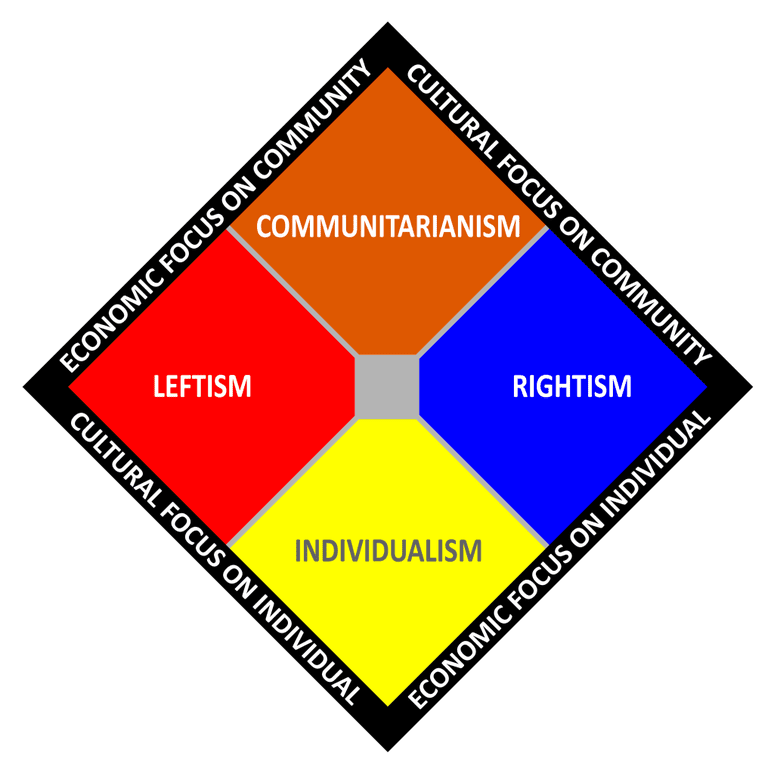
In week three, we turn to the heart of the theory: exploring how to live anarchically in a communitarian way. We begin with an analysis of the liberal political spectrum, discovering that there is a way to reject that spectrum completely. Most of our time during this session will be spent thinking about how we can live without certain things and structures that otherwise seem necessary as we move to abolish laws, rights, the discourse of equality, police, prisons, money, bosses, work, economics, and all institutions in general. (If you are following along with the APC Manifesto book, this session will generally cover chapter 4.)
Session 4 (Aug 14, 2024): The Life of the Polis
Week four will be spent thinking together about some of the practical issues of living in an APC community. We will consider why size is so important to the success of a community (and how degrowth and anti-colonialism are our allies). We will take up possible worries that some might have (such as, “But will I still get to do…?” or “Will I still have nice things?”). We will conclude this session by analyzing the senses in which voting (for any candidate or issue) in contemporary America is an immoral act, how several Indigenous traditions give us interesting models for achieving consensus, and other issues related to how we will likely make decisions together “after the revolution.” (If you are following along with the APC Manifesto book, this session will generally cover chapter 5.)
Session 5 (Aug 21, 2024): Others and Unothers in an APC Eutopia
The final session will consider some classic questions related to “others.” Starting with an analysis of identity politics, we will move to think together about four main topics here as they relate to APC: children/schools; the planet and the environment; the problem of eating; and religion/spirituality. The majority of our time will likely be spent thinking together about animals, plants, and rocks. If there is time, we will conclude with a discussion concerning violence v. nonviolence as a means to achieving a revolution as well as look at some examples from history and the contemporary world (e.g., Venezuelan Bolivarian communes) to guide us. (If you are following along with the APC Manifesto book, this session will generally cover chapter 6 and perhaps parts of chapter 7.)
(NON) REQUIRED READING
There is no required reading for this course, however you are encouraged to get a copy of H. Peter Steeves’ Up From Under the Rulers: The Anarchic Phenomenological Communitarian Manifesto (RPI, 2024). This book will form the skeletal outline of the seminar as we will be working our way through it, approximately chapter-by-chapter, week-by-week. The book can be purchased most easily here (at the cost of preparation, printing, and shipping; no profit): https://beingandshowtime.com/home/apc_order (with or without a Frisbee!). If you are not in a financial position to purchase the book, not to worry. The sessions will not involve a close reading of the text but instead will be about the ideas presented in that text. Having the book would be helpful but is not required or necessary to understand what is going on.

FACILITATORS: H. Peter Steeves, Ph.D., is Emeritus Professor of Philosophy and Emeritus Director of the Humanities Center at DePaul University. He is the author of more than 140 book chapters and journal articles as well as ten books, including: Founding Community: A Phenomenological-Ethical Inquiry (Kluwer, 1998); The Things Themselves: Phenomenology and the Return to the Everyday (SUNY Press, 2006); Being and Showtime (Sawbuck Books, 2020); and Up From Under the Rulers: The Anarchic Phenomenological Communitarian Manifesto (RPI, 2024). Rate My Professor—an on-line professor rating site for students—announced that based on their research culled from more than 1,500,000 professors and teachers in their database, Steeves is one of the “Top 15 Best Professors in the United States.” Apart from working in academia, he has worked as a bioethicist, business ethicist, international election observer, installation artist, musician, cartoonist, software engineer, South American “revolutionary,” and a NASA Ames think-tank member working on the origin of life. He is currently writing three books: one on philosophy and (chronic) pain; one on post-theistic religion, liberation (anti)theology, and anarchy; and one on cosmology, prebiotic chemistry, and astrobiology. You can learn more about Steeves at www.beingandshowtime.com.

Danielle Meijer, M.S., is Adjunct Instructor of Philosophy at DePaul University. Though her undergraduate and graduate degrees are in psychology, she has exclusively taught philosophy for the past thirteen years. Outside of the university, she has also taught at-risk youth in community centers and men living at Stateville Prison in Joliet, IL. In addition to teaching philosophy, Danielle is a professional dancer specializing in Raqs Sharki, Southern Indian Classical Dance, Javanese court dance, Balinese ritual dance, Argentine Tango, Hula, and Flamenco. She is currently writing a book (that will be available for free) on youth liberation.
REGISTRATION
Member discount: $64. Clicking image will take you to our payment account. You may back out at any point before checking out. If you would like to become a member of Incite Seminar visit our member site.
Non-member: $80

Donation: pick your price

 Non-Buddhism
What do you think?