A DIALOGUE ON DEATH AND REBIRTH BETWEEN EMMANUEL OFUASIA AND HANNES SCHUMACHER
A shorter version of this dialogue was first published with Kosmos Journal in December 2023.

Hannes Schumacher: Dear Emmanuel, it’s been a while and I’m excited to delve more deeply into our common fascinations, no longer in terms of an exclusive Western monologue. Even if I may recall the genre of the dialogue in European philosophy—the dialogues of Plato, of Berkeley or Hume—there is something very fake about the very notion of a dialogue: everywhere there is a great protagonist who leads the conversation while the conversation partners are mere puppets who sometimes are allowed to say a little “yes” or “no” but in the end are formally invited—if not expected—to agree. These mono-dialogues are like little dreams in which the appearance of another mind or soul is mere facade or, after all, mere aspects of a solipsistic consciousness. You know what I mean? There’s nothing unexpected in these little Western dreams.
What sparked my enthusiasm for this conversation was the title of a presentation you gave recently at the University of Birmingham: “Die Before You Die”—is that not a proper title also for our dialogue? We had a spontaneous conversation via phone when I found myself surrounded by ferocious mountains in the countryside of Greece with a fragmented internet connection. Drenched in loads of laughter we talked about death and nothingness, about our common interests in Sufism, Heidegger and the Kyoto School, about my Ayahuasca trip in Ecuador, about contemporary permaculture and traditional medicine in Nigeria … What I somewhat missed—haha—is the Ifá conception of death: Could you please explain to me what is death according to the teachings of Ọ̀rúnmìlà and where you see a close connection to the Sufism of Rumi?
Emmanuel Ofuasia: Thank you Hannes. It is a rare privilege to be able to converse over thousands of miles with a being that you may never meet in person. But for the advancement of scholarship, the words of Carl Jung ring through: “Do not be bothered when you find you find yourself alone. If you do your work conscientiously, unknown friends from far away shall seek you.” You have sought me following my discussion on the view of death by Ọ̀rúnmìlà and Rumi which was a talk delivered to the Birmingham Centre for Philosophy of Religion on September 21, 2022.
I was intrigued by the fact that among the Abrahamic monotheisms, the norm is to love God and/or his messenger, live the moral life initiated by that love and aim for eternal life. For these two sages that I encounter, it is the topic of death that seems paramount for them.
Allow me to inform you that the topic of death for these two scholars, really is that there is nothing like death since reality is more than the physical with the capacity to transcend physical extinction. Whereas the one is certain that there is reincarnation, the other is not. However, the common denominator is that persistent thinking about death has the potential to alter our agency as well as how we see the world. In a particular Ifá verse in Ọ̀yẹ̀kú Ọ̀ṣẹ:
The teachings of Ọ̀rúnmìlà were interpreted for the wise ones
Who assembled and invited some Ifá priests to interpret the teaching of Ọ̀rúnmìlà on death
They asked: “Why is it that death kills people and there is no one who does not die?” One Ifá priest reveals that Ọ̀rúnmìlà says “it is good that Ọ̀rúnmìlà the One who brought us into the world created death.
Water which does not flow back and forth becomes a pond of polluted water causing disease
Water takes people away freely and brings them back freely
Let the ill go home to receive a new body;
Let the corrupt go home to receive new character;
So they may return to the world.”
The Ifá priest then asked: “What is unpleasant about this?” The wise ones bowed in respect for Ọ̀rúnmìlà, saying: “The offering has been made; may it be accepted and blessed. Then they dispersed and went away.
And they no longer regarded death as a matter of sorrow.”
There are also similar ideas from the Sufi poet Rumi which points to his outlook on the subject of reincarnation:
I died as a mineral and became a plant,
I died as a plant and rose to animal,
I died as animal and I was man,
Why should I fear?
When was I less by dying?
Please do not hesitate to let me see what you make of the view of these two interesting sages.
HS: The doctrine of reincarnation is well known in reference to the major religions that originated in ancient India: so-called Hinduism, Buddhism and Jainism. But in these religions the eternal cycle of death and rebirth is mostly linked to suffering: so I am pleased to hear about such a positive idea of death and reincarnation. In general I am intrigued by the doctrine because it is able to provide an intuitive, yes even an affective ground for vegetarianism. Even Empedocles exclaimed:
Will you not desist from evil-sounding murder? Do you not see
That you are devouring each other in the carelessness of your mind? (fr. 136)
The father, lifting up his own son who has changed shape,
Cuts his throat, with a prayer—fool that he is! The others are at a loss
While they sacrifice the suppliant; but he [the father], deaf to the shouts,
Has cut the throat and prepared an evil meal in his house.
In the same way, a son seizes his father and children their mother,
And ripping out their life they devour the flesh of their dear ones. (fr. 137)
I wonder, however, whether we should take the doctrine of reincarnation literally. For me it is enough to feel and think that every being in this world is so closely entangled with every other being that it makes no longer sense to speak of independent “beings” with their “own” identities. Put this way, we not only eat the members of our family but we literally eat ourselves. This comes to the extreme that sometimes I feel awkward when chopping vegetables, like I’m cutting my own fingers. I have to laugh again: Were I not enmeshed in the everyday demands to make a living, I would be a proper Jain.
When it comes to Rumi, I’m surprised to find a similar idea even in Islam. Thanks for this, I love the passage. But once again I wonder if we are to take this passage literally: Is it a literal description of his past lives before he became a human or not rather an account of his spiritual deaths during his lifetime as a human?
The beauty of poetry is perhaps that it is open to both readings. We can then differentiate between an inner and an outer meaning, still without the need to value either of them as more important. The outer meaning is more illustrative and perhaps more concrete, but the inner meaning bears less ontological (or ideological) commitments and is more compatible with other systems of belief.
What do you think and feel?
EO: Rumi is a Sufi and highly respected Islamic scholar. His idea of reincarnation is tied to the fact that we need not fear death since it is through death that we graduate to a higher consciousness in the chain or hierarchy of being. An important point of departure of which I am unsure is if Rumi endorses that humans can return as humans. It is also doubtful if Sufi Islam endorses such an outlook wholly. I say this because if the Sufi take such a bold move, then they contradict the belief in the Last Day upon which Allah will mete out judgment to transgressors. So, if one has lived more than one life as a human, clearly such is beyond the jurisdiction of Islamic tenets, some of which the Sufi holds on to.
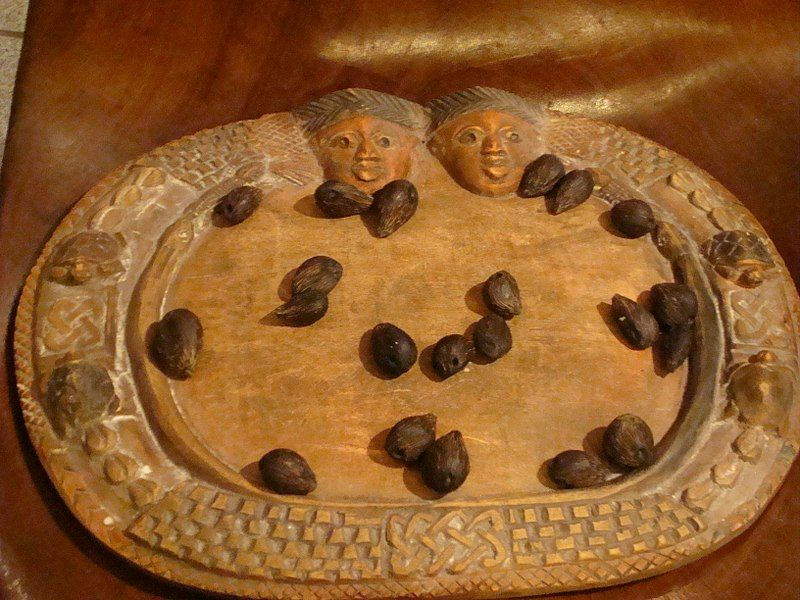
On the other hand, the notion of humans reincarnating and taking up the memory of someone from a previous life is replete among the Yoruba and this is a view also championed by Ọ̀rúnmìlà. I need to however point out that the influence of Euro-Christian civilisation and Arab-Islamic invasion into African indigenous episteme has led most Africans to rebuff their traditional beliefs openly even when they still hold these beliefs dearly and even give names to their children. For instance, Babatunde means “father has returned”; Durojaiye means “tarry to enjoy life” (This is for a child who is believed to be an “abiku,” meaning “born to die children”).
The discourse on death between Ọ̀rúnmìlà and Rumi however has a common ground: constant meditation on death shapes action or agency and therefore their entire living. And when you consider how these two scholars arrived at this point without ever seeing one another, it becomes lucid that indeed, rationality is universal.
Do you agree with this?
HS: Yes, I think I get your point. This contradiction between the doctrine of reincarnation (e.g. in the teaching of Ọ̀rúnmìlà) and the Day of Judgment in orthodox Islam probably has led to many conflicts against and among the Yoruba. Your point—as I understand it—is to argue for a genuine syncretism of Ifá and Islam based on the Sufism of Rumi, or at least to see him as a messenger between conflicting sides. I believe that Sufism is a promising alternative, not only in Nigeria but in many places all around the world. In your presentation you also cited Ibn Arabi:
Generally speaking, each person necessarily sticks to a particular belief concerning his Lord. He always goes back to his Lord through his particular belief and seeks God therein. Such a man positively recognizes the Real only when He manifests himself to him in the form recognized by his belief. But when He manifests himself in other beliefs, he flatly refuses to accept Him and runs away from Him. In so doing, he simply behaves in an improper way towards God, while imagining that he is practicing good manners (adab) towards Him.
(I have to add that this passage is, of course, very male-oriented. The gender of the God and the believer, in my view, belongs to the very “form” that Ibn Arabi talks about.)
EO: There have been no violent confrontations between Ifá priests and Sufi scholars in Nigeria. The difference in their ideology concerning death is just that the Sufi hold on to the pillar of Last Day even when the reality of cases or instances of reincarnation stares them. This is what marks the Yoruba Ifá priests apart.
I should point out to you that there are some Sufi scholars in Nigeria who see Ọ̀rúnmìlà even as a prophet sent by Allah years before Prophet Muhammad. Their argument is that even Ọ̀rúnmìlà could be a muslim and there are Ifá verses that are suggestive of this. This has however created a divide.
On the one hand there are those Muslims who claim that Ọ̀rúnmìlà is a muslim and subordinate to Prophet Muhammad. On the other hand, there are Ifá priests who argue that such cannot be the case.
Now, concerning the male image of God, the passage you quoted is from Ibn Arabi. However, I am one of those who claim that we cannot be certain of God’s sex but it is no more than mere ascription the same way we gave God power, love and knowledge in the superlative senses only to end up with theodicy. In Yoruba linguistics, there is no pronoun for He/She/It that is indicative of sex. What obtains is just a letter “O.” It is the context in which the utterance is made that the sex of the subject/object is known, not without.
This is starkly different from the Abrahamic monotheisms where they claim God cannot be apprehended with the physical eyes but still found God as male.
HS: Beautiful. I was unaware of the practical importance of your work and am tempted to explore the practical implications of my own, if it makes any sense to call it so … After all, do you have in mind a resolution of the contradiction between the doctrines of the Last Day and reincarnation in Nigeria? Rumi is a great authority but he is highly suggestive here. Or do you intend to maintain the contradiction for the sake of a more profound idea of death?
You will have guessed that my remark on gender is not limited to linguistics, nor to the current trends of queer and gender studies in the West. You already mentioned the one-sided superlatives of God resulting in the problem of theodicy. In terms of radical ontology, the question of Being cannot be isolated from its opposite: as you know, the later Heidegger conflates Being (Sein) with Nothing (Nichts); the founder of the Kyoto School, Nishida Kitarō, speaks of an absolute Nothing (zettai mu) which goes beyond the dichotomy of nothingness and being. The idea of death, in these terms, could be elaborated to the degree that death is not only the opposite of life but an event which opens our sight to strange regions where the dichotomy of life and death eventually disappears.
EO: You have raised some interesting points here. I once attended a conference where the speaker said that the first cause is death. So you are not the only one who is thinking along this line.
Concerning your position on the Last Day and reincarnation, I must begin by saying that for the Yoruba belief system in which Ọ̀rúnmìlà is seen as a religious, spiritual and philosophical authority, there is nothing like the Last Day. The most plausible is that we are reincarnated and reincarnating beings as an Odu Ifá which I already shared with you revealed. Rumi, even though a muslim who entertains the possibility of reincarnation, allowed the belief in the Last Day—one of the cardinals in Islamic faith—to override his Sufi notion of possible reincarnation. My own point however is that I was looking at how much they focused on death as the pathway to guide their agency for an afterlife.
Heidegger sees death as nothing but part and parcel of us. The prize for being alive. That which is within us waiting to engulf us as soon as we gush in the first stream of oxygen. So I agree with you that through death we are able to consider more profoundly, aspects of life which we may not wish to entertain or consider.
HS: Like in Anaximander’s fragment:
Whence things have their origin, there they must also pass away according to necessity; for they pay recompense and penalty for their injustices, according to the ordinance of time.
The notion of “home” in Ọ̀rúnmìlà reminded me of this: death is like a leak in the great ark of life, reconnecting us with the furious ocean whence we dwell and strive.
Emmanuel, what I keep on noticing during our conversation is your interest in rationality whereas I am more intrigued by the irrational (perhaps due to our different cultural backgrounds?) By analogy, your idea of death is a continuous contemplation of our human finitude, whereas to me death is a mystical experience. To die before you die, in my view, is not only to contemplate about one’s death but to experience it in all its terrifying depth, but also once again to be reborn into a new light, a wholly different vision of the self and of the world.
In Sufism, this idea is addressed in the concept and practice of fanāʾ which is commonly translated as the annihilation of the self. Mansur Al-Hallaj (858-922 CE)—a more controversial figure in Islam—was executed for uttering the words “I am the Truth” (ana’l-Haq), an utterance which his opponents understand as a blasphemous identification with God. Al-Hallaj’s supporters, on the other hand, see his life and work as the realization of fanā: by killing his individual self, his limited personality, he ultimately unified with the unlimited self of God. In another passage Rumi writes:
‘I am the Truth’ on the lips of Mansur [Al-Hallaj] was the light
‘I am God’ on the lips of Pharaoh was a lie.
When the Shaykh [Al-Hallaj] said ‘I am God’ and carried it through,
he throttled all the blind.
When a man’s ‘I’ is negated from existence, then what remains?
Consider O denier.
What is at stake here, is neither death per se, nor its contemplation, but the experience of ego-death during one’s lifetime.
EO: First, allow me to point out that we are both rational in our dealings. We are employing logic and arguments to reinforce our claims. This means no one’s position is more superior or rational than the other. Second, allow me to stress once again that I am also deeply motivated to undertake traditional African religion from the perspective of process theology, of which we had both briefly talked about over the phone. Now, here is the catch: experience is central to process metaphysics, the foundation of process theology. All things experience and it is this experience that informs how we codify and organise ourselves as entities like no other in the actual world. On this note, the claim to experience death is used loosely by you and truth is only the living can consider death and its mystical accidents or ingredients on behalf of the dead. So, to “die before you die” as used by me in the ideas of Ọ̀rúnmìlà and Rumi is that the consistent REFLECTION not EXPERIENCE on death shapes one’s relation to self, others and the world. It need not be a wholly new or different reflection or perspective. It merely needs to command reflection on the agent that the reality of death, which CAN NEVER BE EXPERIENCED can inform a better view of life.
I see that your use of words and thoughts on the subject matter is based on the concept of fanāʾ and Mansur’s. This is like moving beyond the scope of the present discourse since it centres on Rumi. However, if what is at stake is ego-death as you claim, then at what point does one, personally claim to have arrived at this state of ego-death? Is it posterity that confers such on an individual? Did Rumi and Mansur attain ego-death according to themselves or is it posterity that confers these on them? These distinctions are important for the present discourse. Death is not a thing to be experienced. However, contemplation and meditations on the subject can make one take life more simply. These are the overriding messages from Ọ̀rúnmìlà and Rumi. The notion of experience of ego-death in one’s lifetime as you conclude is another subject matter on its own. This would command some justifications not from Sufism but Buddhism.
HS: Since I participated in an Ayahuasca ceremony in Ecuador, I no longer share these concerns. Ayahuasca in the regions of the Amazon is considered as a sacred medicine that helps us reconnect with nature and experience Being in itself, which can be very terrifying.
After drinking from the potion, I slowly drifted on the floor until the first “visuals” would overtake my consciousness. These highly synesthetic impressions are so sensitive that the soft clicking of a shaman’s lips while speaking, for example, would lead me into wholly different regions such as the unfolding of history, or the food I ate last week, or me reliving the birth of my child both from the mother’s and the child’s perspective. Turning my body to the left would raise my problematic with Trinitarian elements in the spiritual spheres of Latin America, turning to the right would spark my fear and simultaneous excitement to rise higher into burning light …
Inspired by the cosmic poetry of my fellow participant Gabriel, I tried out different languages and my German mother tongue led me into the concentration camps of Auschwitz. Me myself a prisoner I was tortured with medieval torture instruments, with my arms and legs spanning over the entire ceremonial house, when my idea arose that the two shamans—before so nice and calm—intended to kill me. Second, when Gabriel began to move around aggressively while I sank into the ground, I felt that the ceremony had gone terribly out of control and we should try to reach out for some medical help. However, the rest of the night turned out rather calm and I had deep insights into my expanding consciousness and its mutual entanglement with the entire world, until warm sunlight would bring me back to a new life, spiraling in nature’s orchestra.
True, I did not literally die, I was terribly afraid to die, and perhaps this is all. And yet, when I recall that night at the ceremony, I cannot help but remember that I died: it is a tremendous paradox within the flow of my life which turned out irreducible to any other explanation. Of course, you may argue that all this is highly subjective, after all only a matter of psychology, indeed, I have my doubts in it as well. But I claim that there are such altered states of consciousness in which we may experience our own death, at least from a subjective perspective.
EO: What you witnessed cannot be categorized as death experience. Existentially, if you died, you would not be here having this conversation over thousands of miles with me and never ever meeting me. It is a religious experience and like William James once warned us, there are many regions of consciousness that exist aside from the conventional. On page 300-1 of his 2002 edition of his Varieties of Religious Experience, James said:
Our waking consciousness, whilst all about it, parted from it by the filmiest of screens, there lie potential forms of consciousness entirely different. We may go through life without suspecting their existence, but apply the requisite stimulus, and at a touch they are there in all their completeness, different types of mentality which probably somewhere have their field of application and adaptation. No account of the universe in its totality can be final which leaves these other forms of consciousness quite disregarded.
I need to tell you that I agree with James on this and I cannot deny that you had an experience that is not in waking consciousness. What you experience is also why Sextus Empiricus had related that we are only aware of our own mental states:
For each person is aware of his own private pathos [affections], but whether this pathos occurs in him and his neighbor from a white object neither can he himself tell, since he is not submitting to the pathos of his neighbour … And since no pathos is common to us all, it is hasty to declare that what appears to me of a certain kind appears of this same kind to my neighbor as well.
Yes, I cannot enter into your pathos and you cannot enter mine. On a rational and deeper reflection you may have witnessed another dimension to consciousness. Your description does not come close to near death experiences or out of body experiences. You did not die Hannes. You only experienced reality from another dimension. What I can confidently say is that the experience that you had that night currently lacks vocabulary and parapsychology needs to be given more opportunity to express itself for cases as yours. You had a “conscious experience” beyond the normal, conventional waking consciousness. This is all I can say about this Hannes.
HS: Ok, but you will certainly agree that I am not the only one who had such an experience of spiritual death in altered states of consciousness. To my own surprise, I found a striking similarity to Amazonian shamanism in the Sufism of Al-Hallaj, not very different in kind from the parallel you draw between Ọ̀rúnmìlà and Rumi. True, you argue strictly philosophically whereas my own approach is fused with very personal insights of radical experience, but I am sure that you will have similar insights when you have a closer look at ecstatic practices both in Ifá rituals and Sufi dance.
My reading of Rumi is inspired by my encounter with Al-Hallaj, but I do not think that it actually leaves the scope of your inquiry: it rather expands it. As you know, conceptual thought tends to be a mere abstraction if we don’t confront it with experience, be it mystical experience, as in my case, or even contemplation: is not contemplation another word for the “experience of thought” that Hegel talks about? So when I bring the “irrational” into play, indeed, I do not mean to abolish rationality—quite to the contrary. Not only on the ground of rational thought—as in Heidegger or Meillassoux—but also on the basis of experience are we constantly embraced by an infinite abyss, and this abyss is not an enemy of life but it gives profound intensity to it.
EO: I am a big fan of personal experience and this is one of the reasons why I chose to major in Metaphysics—if I cannot change society or the world, at least I should be able to study ways through which I can position myself to cope with whatever the society or the world throws at me. The problem we have is that there is a strict censorship pertaining to the kind of knowledge that can be published and taken as “scientific.” This is where the problem lies. On this account, some experiences, very insightful and relevant, are usually left out of scope. This is why I have the deep conviction that as humans we are not operating with our mental faculties at the optimum level. In fact, we barely use it.
So on this note, I challenge you to see yourself as studying yourself. See your experience(s) as ways that yourself keeps unfolding you to seeing yourself. You are on the right track regarding positioning yourself to see things in new lights even though not conventional.
Yes, I agree with you that there are such experiences during ritual dances of some African traditional worshiping of deities like Osun, the African goddess of water and flowing springs. However, these people hardly want to talk about these experiences as you do yours and neither do they even think it is worth researching about.
Yes, experience needs to be understood and analyzed for assisting us with the actual world. This is the contention of my main influence Whitehead and I must tell you that this truth resonates within me.
HS: I find it interesting how you conflate the discipline of metaphysics with personal experience: while metaphysics investigates the nature of the absolute, i.e. a knowledge which ranks higher than objective facts, personal experience can be terribly subjective: you seem to draw a circle here which from my point of view is very stimulating. By investigating ourselves, we learn a lot about the world around us, and most importantly about the cultural biases we inherit. If we are able to erase these cultural biases not only theoretically but also in practice, the study of the self becomes the study of the absolute but from an inside perspective.
This is another thing I learned from Ayahuasca: I am nothing, I am everything. But still I am this vulnerable, limited existence with its memories and dreams.
Following these lines of thought, the armchair philosopher—to draw a parallel to the armchair anthropologist—attempts to maintain a fairly old-fashioned ideal of a dislocated mind without a body, a view that is colonialist in kind. My nomadic, situated perspective, on the other hand, tries to understand religion and philosophy within each context of my personal experience and in particular my transformations.
As Heidegger described the life of Aristotle: he was born, he worked, he died. Now let us come to his philosophy … It is not that I’m particularly interested in biographies—quite to the contrary. My point here is to identify the cultural biases inherited in each philosophy, e.g. Aristotle spoke a language with the verb “to be”. In my case, I grew up in a cultureless society in southern Germany where a merely formal atheism is paired with a hostile Calvinistic moral. In return, I broke with these cultural biases and went to live in various locations in the Global South in search of different perspectives which I found and adapted to some degree. But we also have to see how such movements to the opposite extreme are still triggered by the original biases, and ask how they can be relativized as well. Such questions trouble me not only personally but also philosophically. May I ask how are your experiences in a very different cultural surrounding?
EO: First, let me respond that in the contemporary world science rules and by science I mean scientific materialism which cannot account for consciousness and silent wherever paranormal but individualised realities, like your “death” experience are discussed. This is no fault of yours Hannes. It is how the world has been structured by some seemingly informed gatekeepers of knowledge. Through this medium, what will count as knowledge and will not is mediated by these gatekeepers. This is why the conventional knowledge bloc is reactionary as you have correctly noticed. I realised this in my fourth year when I read Fritjof Capra’s Tao of Physics and Gary Zukav’s The Dancing Wu Li Masters. That was when I started entertaining doubts about substance metaphysics which permeates the history of Western philosophy. Where event or becoming philosophy are mentioned, scholarly attention is almost silent.
Allow me to relay that in the midst of my philosophical-spiritual journey, I have adapted some aspects of Darwinism, especially the topic on survival of the fittest. It is not the wisest, strongest, meanest, that survives. It is the one with the ability to adapt to the changes in the environment. I have brought this conviction to my living and interaction practices to almost everywhere I find myself.
I have a background in Christianity which I had broken from since I find no point reading a Bible that teaches me that God created light before the sun or that there is Heaven or Hell when reincarnation is more real. I moved to investigate traditional African religion and I realise that they have nearly all the answers to my puzzles rather than the Abrahamic monotheisms. Nevertheless, I keep a good relationship with Muslims and Christians, but I do not let them convince me into their faith much as I do not bother them about mine.
An important point I understand is that no one is making it out of this place alive. Live and let live! My ontology, my spirituality works for me but I see people around me who seek to tap into another person’s spirituality through what they call religion. I cannot change them. My ideas are enough for me and I adapt them to wherever I find myself. Of course, whoever comes to me can only be made to think and reflect on their place in this doomed existence of ours. I cannot foist or even pass my beliefs and modus operandi to them. Spirituality is like an electric pole passing through a street. Anyone can tap into it from their plots. Why would I want anyone to “tap from my own tapping” (i.e. religion) when they can experience and manifest their god-like features?
_______________________
BIOS
Emmanuel Ofuasia teaches philosophy at the Philosophy Department of National Open University of Nigeria. He specializes in: Process Ontology; African Philosophy of Religion; Animal Rights; African Logic; and Ifá Studies. He is widely published in these areas and has received local and international grants from organizations and institutions such as: Birmingham Centre for Philosophy of Religion in conjunction with the John Templeton Foundation; Culture and Animal Foundation (CAF); Institute of African and Diaspora Studies (IADS) in the University of Lagos, Lagos.
Having lived and studied all around the world, Hannes Schumacher works in European and Asian philosophies focusing on their various intersections in terms of metaphysics, logic and religion. He completed his MA in Berlin with a thesis on Hegel and Deleuze, and he also published widely on Nishida and Nagarjuna. In his current micro-projects, Hannes explores the potential of real dialogue as a method for cross-cultural philosophy and fabulates a subterranean network of subversive spiritual practices across the continents. Hannes recently facilitated a four-session course at Incite Seminars, “Nishida Kitarō: The Logic of Place and the Religious Worldview.” He is the founder of the Berlin-based publisher Freigeist Verlag and co-founder of the grassroots art space Chaosmos ∞ in Athens.


 Non-Buddhism
What do you think?